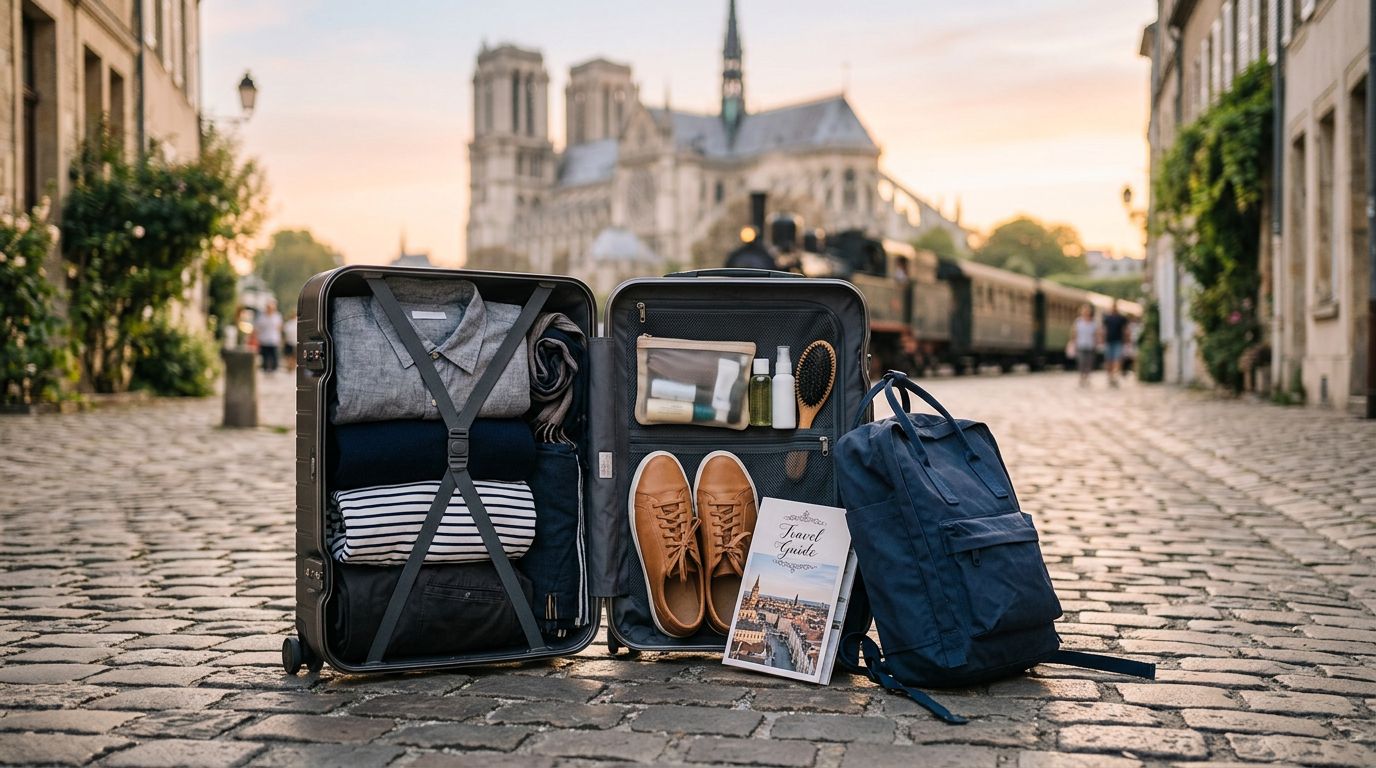


Two weeks in Europe does not require a massive collection of clothes, four pairs of maybe shoes, and a panic-thrown blazer you already know you will not wear. If your luggage feels like a heavy weight before you even leave for the airport, it is time to reconsider your approach and avoid overpacking for the journey.
The trick to packing light for Europe trips is not about undergoing a minimalist personality transplant. It is about setting strict limits, repeating outfits on purpose, and remembering that Europe has stores, soap, and modern amenities. By aiming to fit everything into one suitcase, you will find that navigating cobblestone streets and train stations becomes significantly easier.
Key Takeaways
- Limit Your Luggage: Choose a carry-on or backpack that forces you to be selective, ensuring you can easily navigate cobblestone streets and crowded train stations without assistance.
- Pack for One Week: Instead of preparing for every potential scenario, pack for seven days and plan to do laundry once, which drastically reduces the physical weight of your luggage.
- Master the Capsule Wardrobe: Stick to a neutral color palette where every item mixes and matches, and avoid packing clothing that only serves a single purpose or outfit.
- Edit Ruthlessly: Before leaving, lay your items out and remove the “maybe” items; if you can’t imagine wearing it on a regular day, it doesn’t belong in your bag.
Start with a smaller bag than your brain wants
If you want to carry less, the first move is boring but brutal: pick a smaller bag. Not tiny, and not chaotic, just small enough that it forces good choices.
For most two week Europe trips, a carry-on bag or a travel backpack is enough. Add one personal item, like a tote or bag that fits under the seat, and you are set. The bigger the bag, the more nonsense sneaks in. Suddenly you are packing three sweaters for one forecast and a backup purse for your backup purse.
A light bag matters more in Europe than people expect. Think of train platforms without elevators, old apartment stairs, uneven sidewalks, and cobblestones that seem personally offended by your luggage wheels. A manageable bag is freedom. A giant suitcase is a clingy ex.
Rick Steves has long pushed the same idea in his packing smart advice: bring less, move easier, and enjoy the trip more. That part is not glamorous, but it is true.
A few rules save a lot of regret:
- Stick to a standard carry-on bag if you can, and always check the weight limits and size rules for specific European airlines before you leave.
- Choose a bag you can lift into an overhead bin without performing public theater.
- Leave the expandable zipper closed. If you need the expansion section on day one, we need to talk.
- Keep your personal item light enough to wear or carry all day if needed.
- Opting for a smaller bag helps you easily navigate transit and avoid high checked bag fees.
Your bag should fit your trip, not your fear. You are not moving abroad. You are going on vacation.
Build a one-week wardrobe, not a two-week fantasy life
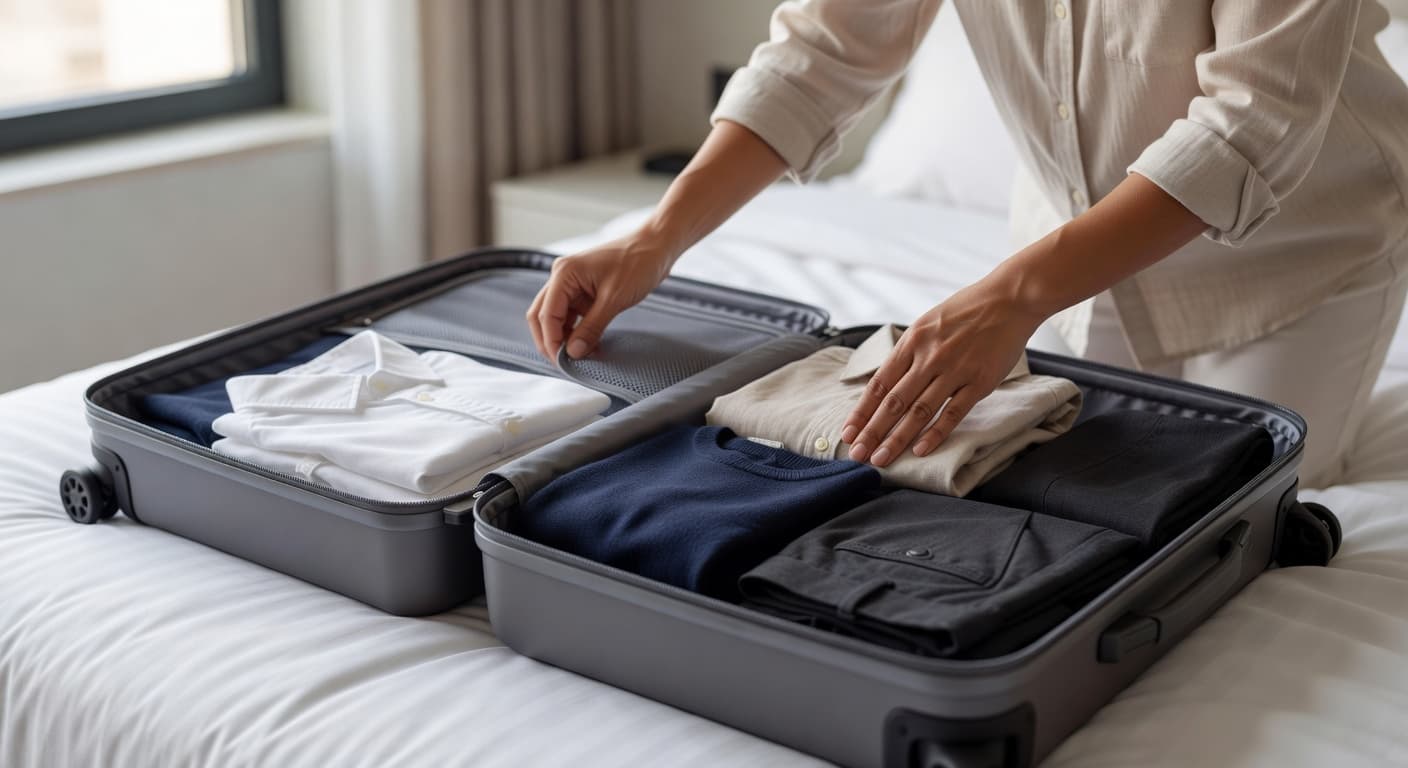
Here is the mindset shift that changes everything: pack for seven days, not fourteen. Then plan to do laundry once during your trip.
That one choice cuts your bag in half.
Most people overpack because they imagine a brand-new outfit for every city, every dinner, and every photo. This is cute in theory, but exhausting in practice. Europe trips are full of repeat realities, such as coffee runs, train days, weather changes, walking tours, and those moments where you wonder why a street is suddenly vertical. You need clothes that mix, layer, and survive a second wear. To keep your luggage organized, use packing cubes to separate these items, which also makes your mid-trip laundry plan much easier to manage.
A simple way to build your packing list for Europe is to use the 5-4-3-2-1 packing method. This versatile formula helps you stay focused:
- 5 tops
- 4 bottoms
- 3 pairs of socks
- 2 pairs of shoes
- 1 dress or nicer outfit, if you will use it
That is the base. Adjust for the season, not for drama.
Stick to a color palette that plays nicely together. Embracing a classic European style with neutrals is a winning strategy because it does not make you think too hard at 6:30 a.m. in a hotel room. Think black pants, a white tee, a striped sweater, a denim shirt, a simple dress, and one jacket. Suddenly, almost everything goes with everything else, and your suitcase stops acting like a costume trunk.
If an item only works with one outfit, it needs to be spectacular or it needs to stay home.
Fabric matters, too. Lightweight knits, wrinkle-friendly shirts, and layers beat bulky pieces every time. One merino wool sweater can do the job of three dramatic “just in case” tops. A button-down can work open over a tank, tucked into trousers, or tied over a dress. That is how you create a functional capsule wardrobe without looking like you are wearing the same outfit in every photo.
Shoes and outerwear are where overpacking gets messy
Let’s be honest. Shoes are the usual suspects.
For a two-week trip, two pairs is enough for most people. Three only makes sense if one pair is tiny, like flat sandals, and you know you will wear them. Anything beyond that is your suitcase filing a complaint.
Your first pair should be your workhorse. Think comfortable walking shoes or sleek weather-resistant trainers that do not scream that you packed for a marathon but will only visit bakeries. Wear that pair on the plane. It is usually the bulkiest one, and it saves space immediately.
Your second pair depends on the trip. Maybe it is loafers for city dinners, sandals for summer, or ankle boots for cooler months. What it should not be is a high-maintenance shoe that rubs, slips, or requires a perfect outfit. Europe will humble that kind of optimism fast.
Cobblestone streets do not care that the shoes are cute. Prioritizing versatile footwear and lightweight layers significantly increases your mobility, allowing you to move through historic city centers with ease rather than struggling with heavy, unnecessary gear.
Outerwear needs the same discipline. One medium-weight jacket is usually enough, especially if you layer under it. A lightweight rain jacket works for spring and fall. In winter, wear your coat in transit instead of trying to wedge it into a suitcase like you are stuffing a sleeping bag into a cereal box.
Scarves are underrated. One scarf can add warmth, dress up a plain outfit, and rescue you from a chilly train or breezy evening. That is range. We love range.
The same goes for bags. Bring one day bag that zips shut and works with everything. A crossbody bag is usually the easiest choice. It leaves your hands free, keeps your belongings close, and does not ask you to carry a giant tote all day like you are commuting to a corporate office you never wanted.
Toiletries and tech are the sneaky little space thieves
Nobody means to overpack toiletries. It just sort of happens. One serum becomes five, and full-size shampoo joins the party. Suddenly, your liquids bag looks like you opened a tiny shop at airport security.
Condense what you use into small containers. Bring travel size options. If you can swap liquids for solid toiletries, even better. Shampoo bars, solid soap, and stick sunscreen can save both space and stress.
You also do not need two weeks worth of every product unless it is medication or something difficult to replace. Europe has pharmacies and grocery stores almost everywhere you will go. Running out of face wash in Lisbon is not a crisis. It is simply an errand.
Tech needs boundaries too. For most travelers, the list is short: phone, charger, power bank, travel power adapter, earbuds, and maybe a camera if you plan to use it every day. That is it. Leave the laptop at home unless you need it for work. Vacation you is not suddenly becoming a disciplined content machine on a regional train.
A small pouch for cords helps more than people think. So does keeping all your tech in one designated section of your day pack. No scavenger hunt, no panic at hotel checkout, and no rogue charger living at the bottom of a shoe.
Keep a few things easy to grab in your day pack: passport, wallet, medications, lip balm, phone charger, pen, and one snack that does not explode into dust. Airport food prices are rude enough already.
Do the floor test before you zip anything
The best packing trick is not a product. It is editing. If you want to successfully travel carry-on only, you must be ruthless with your selection.
Lay everything out on the bed or floor before it goes into the bag. Then, remove at least three things. Do not just remove the easy items. Get rid of the things that make you say, “Well, maybe.” Those are the freeloaders. Even your favorite comfortable walking shoes should survive this test; if they are too bulky or you do not have a specific outfit for them, leave them behind.
This quick test works every time:
- Pack the bag fully.
- Carry it around your home for five minutes.
- Lift it into an overhead height space.
- Open it and cut anything you already forgot was in there.
That last part stings, but it tells the truth. This process is particularly empowering for a solo female traveler who needs to be able to manage all her gear without assistance.
A two-week Europe trip also gets easier when you build in one laundry stop. Whether you use a hotel laundry room, a local laundromat, or a quick sink wash, doing one load halfway through means you can pack less and still feel human. Simply pack a few laundry detergent sheets if you want to keep your kit lightweight and mess-free.
Leave a little empty space too. Not a ton, but enough for a market scarf, a small ceramic dish, or the snacks you swore you would not buy but absolutely will. A stuffed to the max bag on the outbound flight is a rookie move.
The goal is simple: your suitcase should feel boring in the best way. It should be easy to carry, easy to unpack, and easy to repack at 5 a.m. when you are racing for a train and questioning every life choice that led to this platform.
Frequently Asked Questions
How do I handle laundry while traveling for two weeks?
Plan to visit a local laundromat or use your hotel’s laundry service halfway through your trip. Many travelers also pack a few laundry detergent sheets to wash essential items in a sink, which keeps your packing list short and your clothes fresh.
Can I really get by with only two pairs of shoes?
Yes, by wearing your bulkiest, most comfortable walking shoes on the plane and packing one versatile second pair, you save significant space. Choosing shoes that match your entire capsule wardrobe ensures you are prepared for both sightseeing and dinners without overpacking.
Should I bring full-sized toiletries?
Avoid bringing full-sized products, as they take up unnecessary space and weight. Condense your essentials into small travel-sized containers or switch to solid toiletries like shampoo bars, and remember that you can easily purchase basic items at European pharmacies if you run out.
What if I need more space for souvenirs?
It is wise to leave a small amount of extra room in your suitcase before you depart to accommodate small gifts or items you pick up along the way. If your bag is packed to the absolute limit on your outbound flight, you will struggle to zip it shut on your return trip.
Final thoughts
A lighter bag changes the whole trip. You move faster, stress less, and stop treating every transfer day like a punishment workout.
If you want to pack light for Europe, the secret is smaller limits, smarter repeats, and one planned laundry day. You do not need more hacks or extra gear. When you learn how to pack light for Europe effectively, you discover that the best travel experiences come from having less to carry.
When your bag closes easily and you can carry it without bargaining with the universe, you know you packed the right amount.
