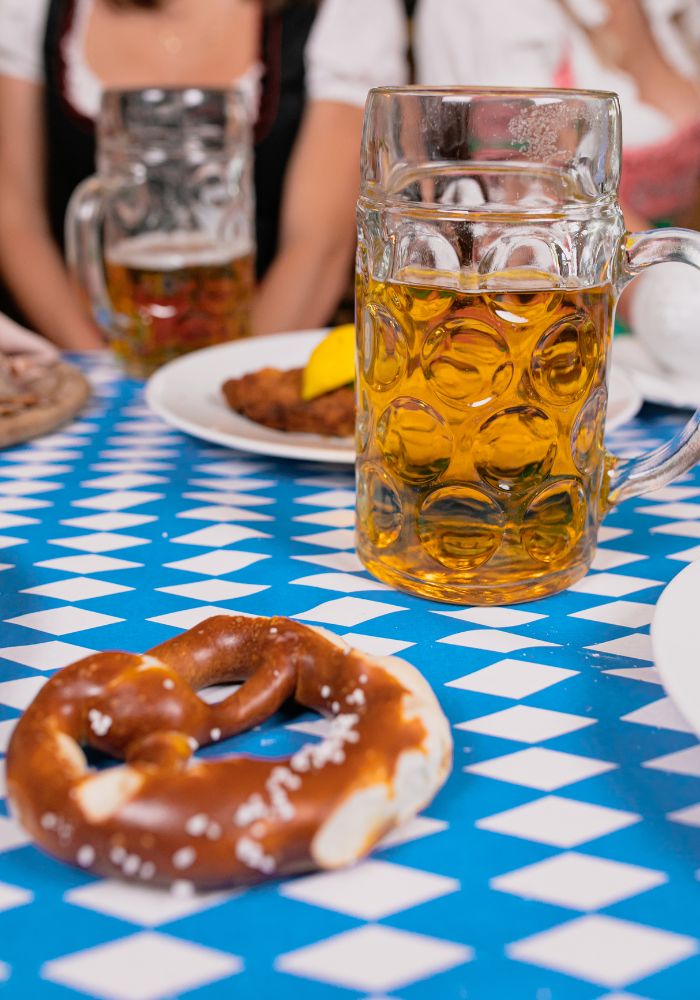


Oktoberfest is big, loud, charming, mildly chaotic, and somehow full of people wearing Lederhosen or a Dirndl before breakfast. For a first visit, the fun can get buried under questions about specific beer tents, reservations, beer prices, and whether you need traditional clothing to enter. Spoiler, you do not.
As a 5 time Oktoberfest veteran, this guide covers the dates, beer tents, costs, food, clothes, transit, and the small survival moves that keep your Munich Oktoberfest day fun instead of feral. You can have a great time without drinking for 12 hours or buying a mysterious VIP package from the internet.
Key Takeaways
- Oktoberfest is hosted at the Theresienwiese fairgrounds, and visitors can enjoy free admission to the festival grounds.
- Weekday mornings and afternoons are the sweet spot for first-timers visiting without formal bookings.
- Table reservations can be helpful for guaranteed seating, but arriving early remains the best free strategy for finding open spots in the tents.
- Budget for food, beer, transit, and tips before accounting for carnival rides, traditional outfits, and souvenir mugs.
- Eat before you drink, stay hydrated, establish a designated meeting point, and rely exclusively on public transportation to get home safely.
When Is Oktoberfest, and What Should First-Timers Know?
Munich Oktoberfest usually begins on the first Saturday after September 15 and ends on the first Sunday in October. Some years, the festival continues through October 3 when the calendar lines up, offering an extra day of fun at the fairgrounds. Check the official Oktoberfest dates and opening hours before booking flights, because that additional time can make a significant difference.
The event is held at Theresienwiese, a large fairground southwest of central Munich. It is not in Marienplatz, although you will absolutely see enough lederhosen around town to wonder if the entire city got the memo.
Entry to the grounds is free. You pay for food, beer, souvenirs, and your questionable decision to buy a gingerbread heart the size of a hubcap.
The opening Saturday includes the traditional keg tapping at Schottenhamel around noon. Weekends are packed, especially later in the day. Families often visit during daytime hours, when the carnival rides, food stands, and smaller tents feel more manageable.
Oktoberfest is also its own thing. Munich has beer gardens and smaller seasonal festivals, but none combine carnival rides, brass bands, giant beer tents, and roast chicken at this scale.
The Best Time of Day for a Weekday Visit
A weekday visit is your low-stress window for enjoying the festival. Tents open earlier in the day, crowds are lighter, and you can eat lunch without fighting for elbow room. If you are interested in the historical side of the festival, make sure to visit the Oide Wiesn area, which offers a glimpse into traditional customs and vintage rides.
Weekday afternoons bring more energy without the Friday night stampede. This is the best balance for most first-timers. You get music, full tents, and a lively crowd, but you can still hear your friend order a pretzel.
Friday and Saturday evenings are fun if you have a reservation. Without one, tent entry can be hard or impossible once security starts limiting access.
The easiest Oktoberfest win is showing up early, not trying to outsmart a crowd at 8 p.m.
How Many Days Should You Spend at Oktoberfest?
Plan one full festival day, then give Munich some breathing room. A few hours is plenty if you want the food, photos, rides, and atmosphere without making beer your full-time job. For a more relaxed experience, consider spending time at a local beer garden outside the main hustle of the festival grounds.
Beer fans may enjoy two shorter visits. Try a weekday lunch in one tent, then return another day for music and dinner elsewhere. Tent access, weather, and crowds can change fast, so do not schedule your trip like a military operation with pretzels.
How to Choose the Right Oktoberfest Beer Tent
Every large beer tent has its own unique mood. Some beer tents feel traditional and family-friendly, while others feel like an international college reunion where everyone has suddenly learned the words to “Sweet Caroline.”
Don’t choose a tent because someone on social media called it the best. Pick based on the type of day you want, then accept that availability may make the final call. You will see many locals and tourists alike wearing traditional Bavarian outfits, which adds to the immersive experience regardless of which venue you choose.
Popular Tents for Traditional Food, Music, and First Visits
Hofbräu-Festzelt is big, boisterous, and popular with international visitors. As part of the famous Hofbräuhaus brewery, it features a massive standing area and a high-energy feel, making it a great choice if you want a social crowd.
Augustiner-Festhalle has a legendary reputation and is the only tent that still pours Augustiner beer from traditional wooden barrels. It is a favorite for visitors who want classic Bavarian music and a slightly less chaotic atmosphere.
Armbrustschützenzelt is known for its crossbow shooting competition, hearty Bavarian food, and a lively but grounded feel. It is an excellent choice if you prefer roast pork and brass music over high-intensity party energy.
Hacker-Pschorr is also worth a visit, particularly for its stunning ceiling painted with clouds and stars, which creates a magical, open-air atmosphere inside the bustling tent.
Smaller tents are worth your time, too. Some focus on wine, sparkling wine, duck dishes, regional specialties, or a quieter meal. No tent is better if it does not match your personal vibe.
 Photo by Johannes Plenio
Do You Need an Oktoberfest Table Reservation?
Table reservations are for entire tables rather than individual seats. They often include vouchers for food and beer, and the table is held for a set time block.
Each tent handles table reservations through its own official process. Check the tent website directly, read the terms, and confirm what your package includes. Remember that a reservation does not always mean you can stay for the entire day.
If you do not have a booking, your goal is to be seated at a table by arriving before the tent reaches capacity. When you arrive, ask a server or host where open seating is available and be ready to share a table with new friends. Avoid unofficial resale offers and vague package sites. A fancy website does not mean someone has legally sold you a seat beside a local German stranger.
What Does Oktoberfest Cost for a Day in Munich?
The grounds are free to enter, but Oktoberfest is not a cheap afternoon. Your overall budget for Oktoberfest should account for rising costs, as a liter-sized Mass of beer typically costs in the mid-teens in euros before tip. Since these traditional steins are heavy and hold a significant amount of liquid, keep in mind that you are paying for both the volume and the unique experience. Food can range from a few euros for a pretzel to much more for a full, sit-down tent meal.
A realistic daily budget is often EUR80 to EUR130 per person if you have a meal, one or two beers, public transit, water, and tips. Add rides, souvenirs, or a traditional outfit, and that number climbs fast.
Cash is king here, but I’d recommend you bring a payment card and some cash. Payment rules vary by tent, but many smaller food stalls and vendors are cash only. Having physical currency is essential for tipping waitresses, making small purchases, and handling an emergency pretzel situation. If you run out of cash, they have about a million ATMs on the grounds so you can grab some more.
Where to Spend Money and Where to Save
Beer, food, transportation, and a safe trip home belong in the planned budget. Everything else is optional, including carnival rides, souvenir mugs, flower crowns, and the EUR40 gingerbread heart that says I love you to someone you met 19 minutes ago.
Eat one substantial meal instead of grazing all day. Share snacks, use public transportation, and set a spending limit before entering the grounds. Keep emergency cash separate from your main wallet to ensure you have enough for your journey home.
What Food Should First-Timers Try?
Start with roast chicken, known as Wiesn-Hendl and potato salad (my all time fave). It is crispy, salty, and built for a beer tent. Pork knuckle, sausages, giant pretzels, potato dumplings, cheese spreads, and apple strudel also earn their place on your plate.
Vegetarian choices are easier to find than many visitors expect, especially cheese dishes, potato plates, dumplings, salads, and meat-free snacks. Order food early when service is calmer. Oktoberfest is a food festival wearing a beer festival’s hat.
What to Wear, Pack, and Bring to Oktoberfest
Wearing a Dirndl or Lederhosen is entirely optional for your visit. While these traditional Bavarian outfits add to the festive atmosphere, you should wear one only if it sounds fun to you. Nobody at the gate checks for Bavarian authenticity certificates, so feel free to skip the dress-up if it does not match your style.
Comfort matters more than looking like a background character in a beer commercial. Munich weather can be unpredictable, ranging from cool mornings and rain to warm afternoons. You will also have to deal with inevitable food spills and long stretches on your feet, so choose your ensemble accordingly.
Bring a small crossbody bag, phone charger, ID, payment cards, cash, hand sanitizer, and any medication you need. Check current bag rules before you go, as large backpacks are often not allowed on the festival grounds. When it comes to footwear, choose closed-toe shoes or sturdy boots. Cobblestones, spilled beer, and carnival crowds are not a dreamy match for delicate white sneakers.
How to Wear Bavarian Clothing Respectfully
If you choose to wear traditional clothing, rent or buy something that fits well instead of grabbing a flimsy costume. A quality Dirndl should feel like proper clothing rather than a Halloween dare.
When wearing a Dirndl, be mindful of the tradition of tying the bow on the apron. A bow tied on the left can suggest the wearer is single, while a bow on the right can suggest they are partnered. Remember that this is a cultural detail, not an invitation, a promise, or a consent signal. Treat people normally. It is a revolutionary concept, I know.
How to Get to Oktoberfest and Get Home Safely
Theresienwiese is easy to reach using Munich’s U-Bahn and S-Bahn network. Stations like Theresienwiese, Goetheplatz, and Schwanthalerhöhe are all useful nearby stops, though your best choice depends on which entrance you plan to use.
Check the Munich transit network before you leave your hotel, especially if you plan to stay late. Follow event signs, expect crowded platforms, and give yourself plenty of extra time to travel.
Walking from central neighborhoods is often easy and convenient. Driving, however, is not recommended. Never drive after drinking, and do not count on grabbing a last-minute taxi when thousands of other people have the same idea.
Where to Stay for an Easy Oktoberfest Visit
Because demand is incredibly high during the festival, you should always book in advance to secure better hotel rates and availability, and our guide to Oktoberfest accommodation in Munich covers which neighborhoods and hotels work best for first-timers. Public transportation makes it easy to stay a bit further out, but proximity is a major benefit for many travelers.
Near Theresienwiese, Bavaria Boutique Hotel and Hotel München City Center Affiliated by Meliá suit travelers who want a short walk home. The trade-off is higher prices and more late-night noise.
Around Munich Hauptbahnhof, 25hours Hotel The Royal Bavarian and Aloft Munich make using public transportation simple and keep you close to the festival. The area is very practical, even if it is not the most postcard-pretty part of the city.
For Old Town charm, look at Louis Hotel or Hotel Torbräu. You will pay more, but Munich’s main sights are right outside your door. Quieter neighborhoods with direct U-Bahn or S-Bahn access can save you money if you do not mind a short ride home at the end of the night.
How to Enjoy Oktoberfest Without Feeling Awful the Next Day
A Mass is a full liter of beer, and it is important to remember that Oktoberfest beer is usually stronger than the light lager many visitors expect. Treat each one like a commitment, because it is.
Eat before drinking, and remember to alternate every beer with a glass of water. Take breaks outside the tent periodically. If you feel too warm, too loud, or too enthusiastic about adopting a new best friend, step away for 15 minutes to clear your head.
Stay with your group when possible and pick a designated meeting point before anyone starts drinking. Keep your phone and wallet in a secure bag, and remember that festival staff and police are always available if you need help.
Oktoberfest Etiquette That Prevents Awkward Moments
Always ask before you get seated at a table that is already occupied. Respect reserved signs, listen to the servers, and tip for good service. While standing on benches is common when the music gets going, standing on tables is not.
Singing traditional songs, clinking glasses, and enthusiastic group cheers are all part of the deal. However, unwanted touching, aggressive behavior, and pressuring anyone to drink are strictly discouraged. Be festive, not a menace.
What to Do If the Tents Are Full or the Weather Turns Bad
If your preferred tent is at capacity, walk the grounds, try smaller tents, grab food from a stall, or ride the iconic Ferris wheel. You might also check out the Teufelsrad for some classic, lighthearted entertainment. A full tent can be annoying, but it is not a personal attack from Bavaria.
Rain calls for waterproof shoes and a light jacket. Keep one flexible block in your day, because tent access is never guaranteed. If you need a reset, head to a nearby beer hall or take a quiet walk through Munich before trying your luck again.
A Simple First-Timer Plan for a Happy Oktoberfest Day
If you want to make the most of your trip, follow these essential Oktoberfest tips for first-timers to ensure a smooth experience. Arrive early before the crowds reach their peak. Start by walking the grounds to get your bearings, then settle into a tent or a sunny beer garden without feeling pressured to rush your order. Make sure to eat a substantial meal before your first beer, take regular breaks outside to breathe the fresh air, and save enough time for a fun carnival ride or a relaxing stroll through a nearby neighborhood.
Families can focus their visit on the daytime rides and delicious food stalls. Solo travelers often find it easiest to share a table on a weekday. For budget-conscious visitors, it is perfectly easy to enjoy the atmosphere by exploring the grounds, grabbing one meal, skipping the expensive rides, and opting for nonalcoholic beverages. You do not have to drink beer to earn your Oktoberfest stamp of approval.
Quick Oktoberfest FAQ
Is Oktoberfest worth visiting? Yes, especially if you treat it as a unique cultural festival, a culinary destination, a massive people-watching event, and a classic beer celebration all rolled into one.
Are table reservations required? No, they are not mandatory. While they can provide peace of mind during peak hours, arriving early in the morning is the best strategy for securing unreserved seating. If you are worried about finding a spot, you can try to book in advance, but most guests manage just fine without doing so.
How much money should I bring? Plan for at least EUR80 for a comfortable day, plus extra if you intend to go on rides, buy souvenirs, or enjoy multiple drinks.
Do I need traditional clothing? No. Comfortable, weather-ready clothes work perfectly fine for any guest. But it is definitely fun to dress the part. (I have 3 dirndls!)
Make Room for the Good Stuff
The best Oktoberfest plan is simple: check the festival dates, arrive at the Theresienwiese early, pick one of the iconic beer tents for its unique atmosphere, budget for traditional food and beer, and know how you are getting home. While a table reservation and traditional Bavarian outfits like lederhosen or a dirndl can add to the fun, none of these are strictly required for a memorable day.
Leave room for the parts you cannot schedule, such as the brass band starting up, the unexpected conversations at shared tables, the delicious snacks, and the moment Munich somehow makes a liter of beer feel like an essential part of local culture. Focus on the experience rather than the checklist, and you will find that the magic of the festival happens in those unplanned, spontaneous moments.
