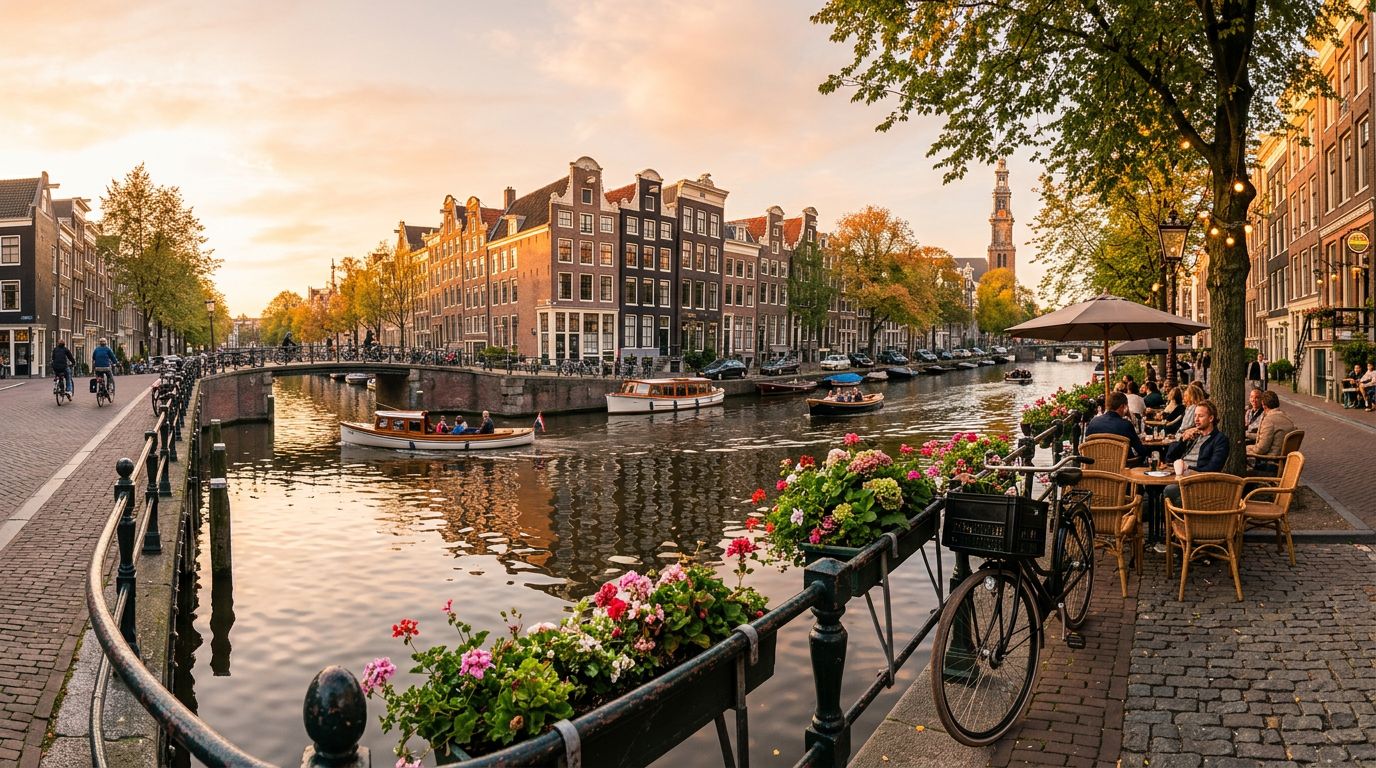


Can you see Amsterdam in three days without turning into a sweaty museum hostage? Yep, absolutely.
The trick is not to cram every historic canal, every painting, and every must-do attraction into one chaotic blur. This Amsterdam itinerary keeps the classics, skips the pointless backtracking, and leaves room for coffee, people-watching, and the occasional moment of bike-related panic.
Key Takeaways
- Stay Strategic: Choose your accommodation based on your priority; pick the Canal Belt for proximity to sights, Jordaan for classic charm, or the Museum Quarter for a quieter, leafier atmosphere.
- Avoid Over-Scheduling: To prevent museum fatigue and burnout, limit yourself to one major attraction per day and leave plenty of time for wandering, coffee breaks, and canal-side lounging.
- Master the Logistics: Take advantage of the extensive tram system and free ferries to Amsterdam Noord, and always pre-book tickets for high-demand spots like the Anne Frank House to avoid disappointment.
- Embrace Local Rhythms: Experience the city like a local by exploring neighborhoods like De Pijp, enjoying an Indonesian rijsttafel dinner, and slowing down to enjoy the historic canal views.
Where to stay in Amsterdam for 3 days
If this is your first trip, stay somewhere central enough that you can walk a lot and use trams only when it helps. The easiest base is Centrum or the Canal Belt. The jordaan neighborhood is a close second if you want prettier, calmer streets. The Museum Quarter works best if art is the whole point.
Stay central if you hate backtracking
Centrum and the Canal Belt make the most sense for a short trip. You are close to Amsterdam Centraal, major sights, canal views, and enough cafes to keep your caffeine standards intact. Skip Damrak if you want quiet at night. It has convenience, but it also has chaos.
The Hoxton, Amsterdam is a great pick if you want canal-house character and a walkable base near de 9 straatjes. Hotel Estheréa feels warm, classic, and close to everything without dropping you in the loudest part of town.

Photo by Mick Latter
Pick Jordaan for charm without the circus
Jordaan is the neighborhood people picture when they say they loved Amsterdam. Narrow lanes, canal houses, little boutiques, brown cafes, and fewer of the shoulder-to-shoulder crowds. It is still central, but it feels more lived-in.
Mr. Jordaan is ideal if you want a small, easy, stylish base near the Anne Frank House and western canal ring. Linden Hotel is another smart choice if you want a quieter stay with a local feel and a short walk into the busiest sightseeing zones.
Choose the Museum Quarter for quieter nights
If your dream day starts with the Rijksmuseum and ends in Vondelpark, this area is a solid call. Oud-Zuid is polished, leafy, and a bit calmer after dark. You will use the tram a little more for the historic center, but it is simple.
Conscious Hotel Museum Square works well for a practical, well-placed stay near Museumplein. Hotel JL No76 is a good boutique option if you want something relaxed, handsome, and easy for both museums and De Pijp.
Getting around without losing half your trip
Amsterdam is walkable, flat, and made for wandering, but do not confuse walkable with tiny. Expect around 4 to 7 miles a day on this plan, with plenty of bridges, cobblestones, and photo stops slowing you down.
Public transport is easy to use when your feet start filing complaints, especially since the tram network is so extensive. If you are arriving through Schiphol airport, the train to Amsterdam Centraal is usually the easiest move to reach the city center. If you are staying closer to the Museum Quarter or Leidseplein, the airport bus can make more sense. To simplify your logistics, consider getting an I Amsterdam city card, which provides unlimited access to public transport and even includes a canal cruise to help you see the city from the water.
One important note, the bikes are not decorative. Look both ways before stepping into a bike lane, and maybe do not rent a bike on your first morning unless chaos is your brand.
The free ferries behind Amsterdam Centraal are one of the best deals in Europe, which is funny because they cost nothing.
Day 1, canals, the historic center, and Jordaan
Start with the postcard views
Begin near Amsterdam Centraal and head into the old center before the crowds fully wake up. Walk past Damrak, then keep moving. Dam Square is fine for five minutes, maybe ten, but the city gets better once you slip into the historic canals of the canal belt.
From there, wander toward Singel, De 9 Straatjes, and Begijnhof. This first stretch gives you the classic Amsterdam look without making you commit to a museum on day one. If you want a simple way to get your bearings, take a canal cruise around late morning or early afternoon. On a short trip, it helps more than people admit.
Spend the afternoon in Jordaan
After lunch, cross into the Jordaan neighborhood. This is where you slow down and let the city do its thing. Browse the side streets, pop into little design shops, and follow the canals without a hard agenda. Brouwersgracht is one of the prettiest walks in the city, and it somehow still feels calmer than the main tourist lanes.
If the Anne Frank House matters to you, fit it here, but only with pre-booked tickets.
Waiting to book the Anne Frank House until you arrive is how this part of your trip gets replaced by standing outside and sighing.
If you skip it, keep the afternoon loose. Have coffee. Sit by a canal. Order apple pie if the day needs improving.
Keep the evening simple
Don’t overbook your first night. Amsterdam is best when you leave room for it. Have dinner in Jordaan or the western canal belt, then take a twilight walk as the bridges light up. A brown cafe after dinner is perfect if you want that cozy, wood-paneled, “I’ve earned a beer” feeling.
Day 2, museums and De Pijp
Choose one big museum, not three
Museum fatigue is real, and Amsterdam can trigger it fast. For most first-time visitors, the smartest move is to pick one major museum in the morning, then leave with your spirit intact. The Rijksmuseum is the best all-around choice for those who want to see famous Dutch Golden Age masterpieces. If the life and work of Vincent van Gogh matter more to you, prioritize the Van Gogh Museum instead.
If you have extra energy after your visit, walk through Museumplein and loop into Vondelpark for a relaxing breather. That is enough culture before lunch. You do not need to prove anything by stacking three museums back-to-back.
Eat your way through De Pijp
From Museumplein, head into De Pijp. The walk is easy, and the mood shifts fast. This neighborhood feels younger, looser, and more food-focused. Albert Cuyp Market is the obvious stop, and it is well worth it for a casual lunch and some local snacking. Grab fresh stroopwafels, a cone of fries, or pick something more substantial if you are trying to balance out your day.
If markets aren’t your thing, or if you prefer a different kind of local culture, the Heineken Experience is located nearby and serves as a popular alternative activity in the area. Otherwise, settle into a quiet cafe in De Pijp and stay put for a while. This part of the city rewards lingering, so focus on having a good meal rather than checking items off a list.
End with a dinner that feels like Amsterdam
For dinner, go for Indonesian food. Amsterdam has a rich history with the cuisine, and a traditional rijsttafel makes for a memorable second-night meal. Afterward, walk back toward the canal belt or stay local to find drinks in De Pijp.
This is the busiest day in the itinerary, but it should not feel frantic. If it does, cut something. The city is not going anywhere, and the best way to see Amsterdam is at your own pace.
Day 3, Amsterdam Noord and a slower final afternoon
Ride the free ferry north
On your last day, do something different. Head back to Amsterdam Centraal and take the free ferry across the IJ to Amsterdam Noord. It takes minutes, and it feels like a mini reset. Suddenly the city opens up, the pace drops, and things get less polished in a good way.
If you want one major indoor stop, choose Eye Filmmuseum for architecture and waterfront views, or go straight to NDSM Wharf for a more industrial, creative side of town. NDSM has street art, wide-open space, and a less copy-paste version of Amsterdam.
Go bigger on street art or smaller on waterfront wandering
If you’re into offbeat stops, STRAAT Museum is a strong pick. If not, keep it simple and wander the waterfront, pop into cafes, and have lunch at NDSM. This is a good place to let your trip breathe a little before heading home.
For even more oddball ideas, Atlas Obscura’s Amsterdam list is a fun rabbit hole.
Finish with one last canal-side dinner
Come back to the center in the late afternoon and spend your final hours near the canal belt or Jordaan. This is the moment for whatever you missed on day one, maybe a last stroll through De 9 Straatjes, one more canal photo, or one final stop for fries and mayonnaise because you’ve fully committed.
Sunset by the canals is a pretty great way to end a first trip. Slightly cheesy, yes. Still worth it.
Easy swaps if the weather or your energy changes
If the weather turns, move your indoor museum time to day one or three and save the canal-heavy wandering for clear skies. Amsterdam is charming in the rain for a few minutes, but eventually, you will want to head indoors. A canal cruise is the perfect rainy day alternative, allowing you to see the city sights while staying completely dry. If you are not ready to rent a bike to get around, walking the city center is perfectly fine and often the best way to soak in the atmosphere.
If you prefer a slower pace, cut your time at Dam Square short, skip the Bloemenmarkt, and spend more time lingering in the Jordaan or De Pijp neighborhoods. These are the areas most travelers remember most fondly. For those who manage to secure last-minute tickets, the Van Gogh Museum and the Anne Frank House are essential swaps for any itinerary. If you are a history buff, consider adding a walk through the Jewish Quarter or a brief, respectful visit to the Red Light District to see the oldest part of the city.
For those interested in extending their stay or taking day trips from Amsterdam, you have plenty of options. In the spring, a trip to see the Keukenhof Gardens is a must, while a visit to Zaanse Schans offers a classic view of historic windmills. If you are more interested in food and drinks, swap extra sightseeing for a long, relaxed lunch or a traditional brown cafe crawl. That is still a fantastic Amsterdam trip, and perhaps an even better one for the soul.
Frequently Asked Questions
Do I really need to book museum tickets in advance?
Yes, absolutely. High-profile sites like the Anne Frank House and the Van Gogh Museum sell out weeks in advance, and walking up without a ticket almost always leads to disappointment.
Is it worth renting a bike as a first-timer?
It is generally better to stick to walking or trams during your first visit. Amsterdam bike traffic is fast-paced and intense, making it a better experience to explore by foot until you are comfortable with the local rules of the road.
What is a ‘brown cafe’ and why should I visit one?
A brown cafe is a traditional, cozy Dutch pub characterized by wood-paneled walls and a warm, inviting atmosphere. They are the perfect places to relax with a drink and soak up authentic local culture after a day of sightseeing.
Should I buy an I Amsterdam city card?
If you plan on visiting multiple museums and using public transport frequently, the I Amsterdam city card is a great value. It covers tram travel and entry to many popular attractions, helping to simplify your trip logistics significantly.
Final thoughts
Three days in Amsterdam works best when you stop trying to win the city. By choosing a smart base, grouping your activities by neighborhood, and leaving some white space in your schedule, you can follow this Amsterdam itinerary to experience the city at a manageable pace.
The best version of this trip is not the one with the most pins on a map. It is the one where you see the big sights, find a few favorite corners, and still have time to sit by a canal and think that you made the right call.
