

London feels completely different once the main landmarks are checked off your list. In my experience, the city becomes much more rewarding when you swap the crowded sightseeing routes for neighborhood haunts, tiny museums, independent shops, and quiet green spaces. This guide rounds up 15 non-touristy things to do in London for travelers who want to embrace a slower, more authentic side of the city. By exploring these hidden gems, you can step away from the usual checklist and discover the everyday atmosphere that locals actually enjoy.
Key Takeaways
- Focus on Neighborhoods: Instead of rushing between major landmarks, group your experiences by neighborhood to save travel time and discover a more authentic, local atmosphere.
- Mix Your Itinerary: Balance free activities like garden walks or street art hunting with one or two smaller, paid experiences to keep your day engaging and cost-effective.
- Prioritize Flexibility: Build a loose schedule with plenty of room for spontaneous discoveries, such as cozy cafés, independent shops, or scenic detours you stumble upon while wandering.
- Verify Logistics Early: Always check opening hours and booking requirements in advance, as many non-touristy gems have limited schedules, and plan the final stretch of your commute beyond the nearest station.
Quick Picks for a Less Tourist-Filled Day in London
If you want London to feel less like a sightseeing conveyor belt, choose one neighborhood and let yourself wander. Instead of cramming six attractions into one frantic day, pick a market, a green space, and a cozy pub or café. These suggestions are ideal for repeat visitors, curious first-timers, and anyone looking for non-touristy things to do in London.
Top Local Experiences at a Glance
| Category | Recommended Spot | Why Visit |
|---|---|---|
| Nature & Parks | Kyoto Garden and Richmond Park | Experience tranquility in secret gardens or vast, wild deer parks. |
| Food & Markets | Maltby Street Market | A fantastic alternative to Borough Market for local markets fans. |
| History | St Dunstan in the East | Discover peaceful, ivy-covered ruins in the heart of the city. |
| Unique Culture | God’s Own Junkyard | A neon-filled, eccentric warehouse in Walthamstow. |
| Scenic Walks | Little Venice to Camden | A relaxing, three-hour canal-side stroll. |
Details for Your London Itinerary
- Kyoto Garden and Richmond Park: The Kyoto Garden in Holland Park is one of the city’s finest secret gardens, featuring waterfalls and koi ponds. For a wider landscape, visit Richmond Park to see the resident deer. Both locations are perfect for those seeking fresh air away from the crowds.
- Maltby Street Market: When the busy stalls of Borough Market feel too crowded, head to this Bermondsey hidden gem. It is one of the best local markets for independent food producers and craft drinks. Pair your visit with a walk along the Bermondsey Beer Mile.
- St Dunstan in the East: This medieval church, damaged during World War II, is now a serene public garden. It offers a quiet escape just steps away from the Tower of London, providing a human-scale pause in your busy day.
- God’s Own Junkyard: This vibrant, neon-lit warehouse in Walthamstow is a must for design lovers. It is bright, loud, and wonderfully eccentric, serving as a refreshing break from typical royal landmarks.
- Little Venice to Camden: Follow the path from Little Venice along Regent’s Canal. This route features narrowboats and waterside cafes, allowing you to experience the city at a slower, more deliberate pace.
Explore London’s Quieter Neighborhoods and Outdoor Corners
London’s local side is hiding in plain sight, usually behind a Tube ride, a residential street, or a park entrance that looks almost too ordinary to matter. These spots trade famous landmarks for peaceful canals, historic gardens, open meadows, and pubs where nobody is selling you a souvenir mug.
Walk the Regent’s Canal from Little Venice to Camden
The roughly 1.5-mile walk from Little Venice to Camden is one of my favorite ways to see London without battling buses and tour groups. The towpath along the Regent’s Canal passes colorful houseboats, leafy gardens, narrow bridges, and stretches so peaceful that the city noise seems to get turned down.
You will also pass through darker tunnel sections before reaching views near London Zoo. Keep an eye out for unexpected glimpses into Regent’s Park, where the route feels more like a country walk than a central London outing. The path is mostly flat, though some bridges, steps, and narrow sections require a little patience.
The walk is free, but comfortable shoes are non-negotiable. Check the towpath after rain, since muddy and slippery sections can turn cute strolling shoes into a tragic personal choice. For route ideas, these self-guided London walks are useful when you want to keep exploring on foot.
Start early for the calmest atmosphere, or go in the early evening once the busiest part of the day begins to fade. Camden bound walkers usually encounter more people, so reverse the route if avoiding crowds is your top priority.
Find the Hampstead Pergola and Hill Garden
The Hampstead Pergola and Hill Garden feels like someone dropped a romantic Edwardian garden into the middle of Hampstead Heath and then tried to keep it a secret. The weathered pergola stretches above terraced gardens, with climbing plants, old columns, gravel paths, and a small waterfall adding plenty of atmosphere.
I especially like this spot for photography because every turn offers another frame. Couples will enjoy the storybook setting, while garden lovers can take their time around the formal planting and elevated walkway. It also works for anyone who needs a peaceful break from central London but does not want to spend the entire day in a museum. You can even find beautiful views of London here if you look closely through the greenery.
Entry is free, and no booking is required. The garden generally opens in the morning and closes at dusk, with seasonal hours, so check before visiting. The walkway includes steps and the gardens are not fully accessible, which is useful to know before you arrive.
Go early, especially on a weekend. Afterward, add a gentle walk through the surrounding parkland. If you are still looking for incredible views of London after your visit, consider walking over to my personal favorite, Primrose Hill. This is my top choice for watching the sunset while I sip an English cider.
See the Dinosaurs at Crystal Palace Park
Crystal Palace Park is home to historic concrete dinosaur sculptures created in the 19th century. They are not sleek, scientifically perfect museum displays, and that is exactly why I love them. These wonderfully strange sculptures look like Victorian artists took a trip through time, made some educated guesses, and then put the dinosaurs in a park.
The open air setting makes this a fun choice for families, history fans, and anyone who enjoys unusual public art. Kids can burn off energy while adults admire the sculptures’ age, scale, and slightly odd expressions. A few of them look as if they are waiting for someone to explain what happened to lunch.
Entry to the park and dinosaur area is free. Visit during daylight hours when the sculptures are easiest to see, then continue with a wider walk around the park. You can explore the lake, wooded paths, open lawns, and other remnants of the old Crystal Palace site without rushing between stops.
Allow more time than you might expect. The dinosaurs are not a quick photo stop if you want to read about them and see the surrounding park. Pack a snack or grab something nearby, then settle into the slower pace that makes this corner of southeast London feel so different from central attractions.
Wander Through Oxleas Wood and Eltham Common
For a proper nature break, head to Oxleas Wood and Eltham Common in southeast London. The ancient woodland has quiet trails, tall trees, open meadows, and enough space to make you forget you are still inside one of Europe’s busiest cities.
This is a better choice for walkers than travelers trying to squeeze in one quick attraction between Westminster and the Tower of London. The paths invite you to wander without a strict sightseeing checklist, while the common opens everything up after the denser woodland trails.
Transport takes more planning here. Some sections are less convenient by public transit, and the journey can take longer than expected depending on where you are staying. Check your route before leaving, especially if you want to combine Oxleas Wood with Eltham Palace or another nearby stop.
I recommend this area for repeat visitors and anyone who would rather spend an afternoon among trees than in another crowded queue. The extra travel time is part of the deal, but the breathing room makes it worthwhile.
Browse Walthamstow Village and Its Local Pubs
Walthamstow Village has the kind of neighborhood atmosphere that makes central London feel like a completely different city. Independent shops, residential streets, small cafés, and nearby canal scenery give the area a lived in feel rather than a sightseeing set feel.
I like visiting in the late morning or afternoon, when you can browse the shops, wander toward the water, and stop for a drink without cramming everything into one frantic hour. The village also pairs well with other Walthamstow stops, especially if you want to turn a quick outing into a relaxed east London day.
Traditional pubs are part of the appeal. The Holly Tree is a good example of the local pub style, with a more neighborhood focused atmosphere than the central London bars built around tourists and post work crowds. Check food service and opening hours before visiting, since pub kitchens often keep their own schedules.
The Victoria line makes Walthamstow easier to reach than its less central location might suggest, but allow extra time if you are combining the village with walks or other sights. Come for a slower wander, stay for a pint, and resist the urge to turn the afternoon into a tightly scheduled field trip. London will still be there tomorrow.
Visit Small Museums, Hidden Gardens, and Unusual London Sights
London’s less famous attractions often have more personality than the big ticket sights. Exploring these small museums and secret gardens allows you to wander through a preserved Victorian home, discover a tropical greenhouse, or stand inside a ruined church without spending the day shoulder to shoulder with large tour groups.
These places are ideal when you want something unusual but still easy to fit into a London itinerary. Most work best as one part of a neighborhood day, so you can pair a specific spot with lunch, a local market, or a long walk nearby.
Step Inside Sir John Soane’s Museum
Sir John Soane’s Museum is a free house museum near Lincoln’s Inn Fields, and it feels more like stepping into an architect’s wonderfully eccentric brain than visiting a traditional museum. The building preserves the home and collection of Sir John Soane, the architect behind the original Bank of England.
Inside, you will find paintings, ceramics, sculptures, architectural fragments, and an impressive number of objects packed into a relatively small space. The interiors are the real star. Hidden doors, skylights, mirrors, galleries, and dramatic rooms make the museum feel like a treasure box that someone forgot to organize. If you enjoy this type of intimate setting, another great free alternative for art lovers is the Wallace Collection.
The museum’s schedule has changed over time, and older listings may show a Tuesday through Saturday pattern. Current visitor information generally lists opening Wednesday through Sunday, from 10 a.m. to 5 p.m., with last admission around 4:30 p.m. Check the official museum visitor information before you go, especially if your London plans depend on a Tuesday visit.
Visit the Barbican Conservatory on a Sunday
The Barbican Conservatory is one of London’s best strange and beautiful combinations. Palms, ferns, tropical plants, and exotic greenery fill the space, while the Barbican’s massive concrete architecture rises around them. It is part greenhouse, part urban jungle, and part proof that brutalist buildings can have a soft side.

Photo by Dominik Gryzbon
Entry is free, but access is limited and the opening schedule is not something I would trust to memory. Sunday visits are commonly available, often during afternoon hours, and timed tickets may be required. Check the Barbican’s current visitor schedule before making a special trip across London.
Explore the Ruins at St Dunstan-in-the-East
St Dunstan-in-the-East is a bombed out church turned public garden, with ivy covered walls, stone arches, and greenery growing through the remains. As one of the city’s most evocative secret gardens, the surviving structure now feels more like a quiet sanctuary than a formal historic site.
Entry is free, and the garden does not need a full afternoon. I would allow 20 to 30 minutes, enough time to walk beneath the arches, take a few photos, and sit for a moment. It works well as a peaceful pause during a City of London walk, especially if you are already visiting the Tower of London, Monument, or Leadenhall Market.
Discover the Horniman Museum in Forest Hill
The Horniman Museum in Forest Hill is free, wonderfully unusual, and worth the trip south. Its collections cover natural history, anthropology, musical instruments, and world cultures, with gardens outside that add even more room to explore.
The overstuffed walrus is the museum’s most famous resident. It has become a favorite for obvious reasons: the animal is huge, slightly bizarre, and impossible to ignore. The museum is a strong choice for families, curious adults, and travelers who enjoy attractions that do not fit neatly into one category.
The usual opening pattern is daily daytime access, often around 10 a.m. to 5:30 p.m., though individual exhibitions and garden areas can follow different hours. Confirm the details on the Horniman Museum’s official website before traveling to Forest Hill.
Tour Wilton’s Music Hall or the Old Operating Theatre
For unusual London history, choose between Wilton’s Music Hall and the Old Operating Theatre. Both offer a very different look at the city, and neither feels like a standard museum visit.
Wilton’s Music Hall in Whitechapel is a surviving Victorian music hall with worn walls, historic interiors, and a lively program of performances. You can visit for a guided tour, exhibition, or show, but the performance schedule may affect what you can see and when you can enter.
The Old Operating Theatre is located near the South Bank inside the attic of St Thomas’ Church. It focuses on 19th century medical history, including surgical tools, teaching methods, and the realities of medicine before modern anesthesia and hospital technology. It is compact, atmospheric, and not exactly the place I would choose for a delicate stomach. Pick Wilton’s if you love architecture and theater, or choose the Old Operating Theatre if medical history and intimate historic spaces sound more interesting.
Eat, Shop, and Follow Local Creative Energy
London’s local feel often appears around a market stall, a flower bucket, or a warehouse covered in neon. These are the places I like when I want a fun day without standing in the same queue as every city-break visitor.
East London is especially good for this kind of wandering. Plan around one market or creative neighborhood, then leave room for lunch, coffee, a riverside walk, or a pub stop when something catches your eye.
Eat Your Way Through Whitecross Street Market
Whitecross Street Market in Islington is a weekday food market with plenty of choice for a casual lunch. As one of the most reliable local markets for quick bites, it offers everything from Korean barbecue and Vietnamese dishes to artisanal cheese and Ethiopian plates. If you are hunting for authentic street food that is much more exciting than a sad desk sandwich, this is the place to be.
The market usually runs Monday through Friday from around 11 a.m. to 3 p.m., although many vendors start packing up between 2 and 3 p.m. Tuesday through Friday are reliable days for food stalls. Saturday is generally quiet or closed, so check the schedule if you’re planning a weekend visit.
I like Whitecross Street because you can show up without a grand plan. Grab something hot, browse the smaller stalls, and find a bench or nearby office courtyard for lunch. It is practical, affordable, and much less demanding than markets where you need to arrive with a strategy, a backup strategy, and the elbows of a rugby player.
Unlike Borough Market or Camden Market, Whitecross Street feels more connected to local workers than sightseeing itineraries. The atmosphere is busiest around lunchtime, so arrive before noon if you want the broadest selection and a little more breathing room. For more ideas beyond market snacks, my guide to UK food experiences and local delicacies has plenty of edible distractions.
Browse Columbia Road Flower Market Early on Sunday
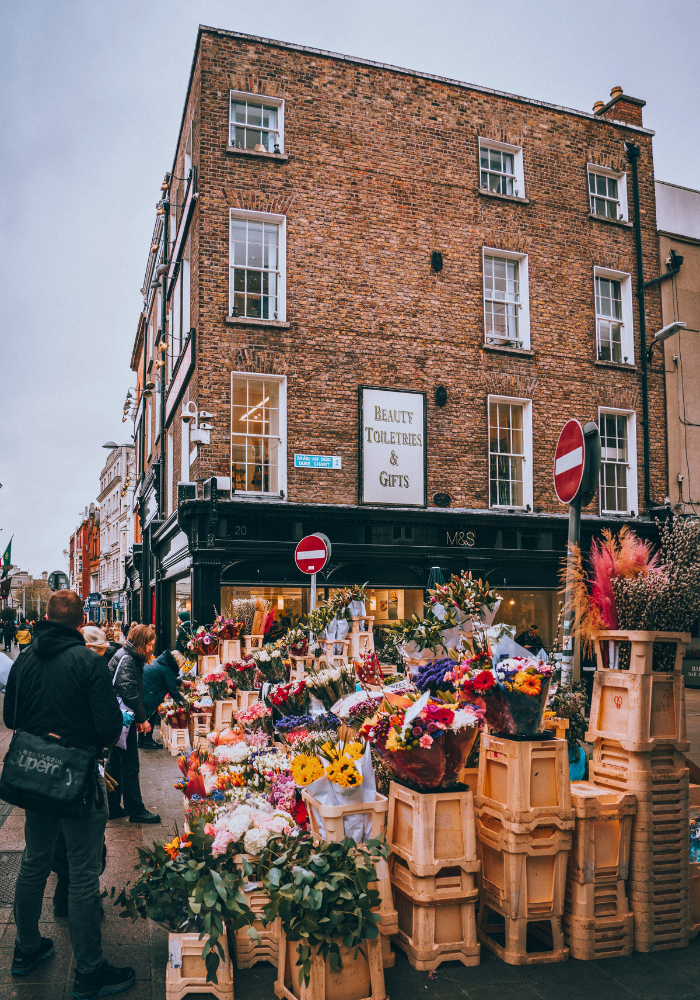
Columbia Road Flower Market turns a narrow Bethnal Green street into a riot of color every Sunday. Flower sellers line the road with buckets of seasonal blooms, potted plants, herbs, trees, and houseplants, while food stalls and independent shops add snacks, coffee, baked goods, and plenty of reasons to keep stopping.
The market runs from about 8 a.m. to 3 p.m., with sellers often beginning to wind down earlier in the afternoon. I recommend arriving close to opening time. The selection is excellent, the light is softer, and you can actually move without apologizing to someone every six seconds.
Browsing is free, but the street becomes crowded by late morning. Between the narrow pavement, plant carts, flower buckets, and people trying to photograph the perfect tulip display, the market can feel like a floral traffic jam. Bring cash as a backup, and don’t buy a six-foot plant before checking how you’re getting it back to your hotel.
The market is surrounded by colorful storefronts and a lively East London neighborhood, so don’t rush off after your flower inspection. Pair it with a walk through Shoreditch or wander toward Brick Lane if you want to enjoy some excellent vintage shopping. You can also check the Columbia Road Flower Market schedule before setting an alarm that feels offensively early on vacation.
See Neon Art at God’s Own Junkyard
God’s Own Junkyard is a warehouse-style gallery in Walthamstow filled with vintage neon signs, colorful displays, old cinema lights, and glowing pieces that make even a gray London day look like a music video. The space is wonderfully over-the-top, with barely a beige wall in sight.
Entry is free, although donations are welcome. There is also a small café, so you can grab a drink while wandering through the signs and giving your phone camera a serious workout. Photographers, design fans, vintage lovers, and travelers who want an indoor activity with actual personality will have a great time here.
From central London, expect roughly 35 to 50 minutes depending on your starting point and connections, followed by a walk from the station. Walthamstow Central Station (Victoria or Weaver line) is usually about a 15-minute walk away, while Wood Street Station (Weaver line) can be closer.
Public opening is generally Friday through Sunday, but private events can affect access. Check the latest visitor details for God’s Own Junkyard before traveling. The entrance is tucked inside an industrial estate, which is part of the charm and part of the reason you shouldn’t assume your navigation app has everything under control.
Follow Street Art Along Hackney Wick and the River Lea
Hackney Wick is made for travelers who prefer murals, warehouse venues, creative studios, and riverside paths to polished attractions. Former industrial buildings are covered in street art, while independent creative spaces and independent coffee shops fill the area around the canals and River Lea.

Photo by Nicholas Hatherly
Start near Hackney Wick Station and explore White Post Lane, Wallis Road, and the area around The Lord Napier pub. You will find murals on building exteriors, community artwork, colorful brewery spaces, and plenty of unexpected details between the larger pieces. The route changes over time, so part of the fun is seeing what has appeared since your last visit.
A weekday afternoon usually feels more relaxed than a sunny weekend, especially if you want time for photos or a riverside walk. Don’t assume every studio is open to the public, though. Enjoy the art from public paths and check event listings before expecting access to a particular workspace.
Hackney Wick Station is the easiest starting point, and you can also connect the outing with the Olympic Park.
Try a Local-Feeling Pub or Taproom in East London
East London has plenty of relaxed places to stop for a drink, whether you choose a craft-beer taproom such as Pretty Decent or Gravity Well, or a traditional pub like the Holly Tree. These spots work well after exploring Walthamstow, Leyton, Forest Gate, or Hackney Wick.
A taproom usually focuses on beer brewed on-site or by a small group of independent breweries. Expect a rotating list, modern interiors, counter service, and sometimes pizza or casual snacks. Traditional pubs feel more established, with a broader drinks menu, a slower pace, and food service that may revolve around lunch, dinner, or a Sunday roast.
Opening patterns vary. Taprooms often open later in the week and may be busiest on Friday evenings, while neighborhood pubs can open daily but keep separate kitchen hours. Walk-ins are usually possible, though larger groups, special events, and busy weekend evenings can change that quickly.
Check the menu, event calendar, and transport options before heading out. Some of these places sit away from central Tube stations, and nobody wants to discover the last train situation after ordering one more pint. In my experience, one local drink is often the perfect ending to an East London afternoon, especially when the alternative is navigating back through a packed tourist bar.
How to Plan These Non-Touristy London Experiences
The trick to experiencing London like a local is not finding a secret location nobody else knows about. Those places usually become famous the second someone posts them on social media. Instead, choose the right neighborhood, visit at a sensible time, and leave enough space for wandering.
I plan these outings around one main experience, one nearby food stop, and one flexible extra. That keeps my day interesting without turning it into a military operation involving six Tube changes and a granola bar for lunch.
Build Your Day Around One London Neighborhood
London is huge, and crossing the city for every activity wastes time fast. Group nearby experiences together whenever possible. To truly explore off the beaten path, pick one specific neighborhood and focus your energy there. For example, a morning at Columbia Road Flower Market pairs naturally with Bethnal Green or Broadway Market. Similarly, you might enjoy a self-guided walking tour through Notting Hill to see the colorful mews and local cafes before heading toward a quieter park.
I use this simple formula when planning:
- Pick one main neighborhood.
- Choose one anchor activity.
- Add a cafe, market, pub, or park within walking distance.
- Keep one optional stop in reserve.
That last part matters. Maybe the weather turns miserable, your lunch takes longer than planned, or you discover a bookstore that demands your immediate attention. London is much more enjoyable when your itinerary has breathing room instead of treating every free minute like a personal failure.
Try to stay within one part of the city for at least half a day. You can still use the Tube, but short local journeys and walks reveal more of London residential streets, small businesses, and ordinary routines. In my experience, that is where the local feel starts to show up.
Choose the Right Day and Time
Many of London’s best less-touristy experiences depend on timing. Columbia Road Flower Market takes place on Sundays, while Whitecross Street Market is primarily a weekday lunch stop. Portobello Road Market is strongest on Saturdays, and God Own Junkyard is generally a weekend outing.
Check opening days before building your entire itinerary around a place. London attractions, markets, pubs, and small museums often keep different schedules, especially outside the central sightseeing areas. A quick look at the official website or current listings can save you from traveling across town to admire a locked door.
Arrive early if you want fewer people and better choices. This works especially well for flower markets, neighborhood food markets, popular walking routes, and small museums with limited space. Early mornings also make London feel more local because you see vendors setting up, commuters grabbing coffee, and shopkeepers opening for the day.
Use Public Transit, but Plan the Last Stretch
The Tube makes it easy to reach most neighborhoods, but many local-feeling activities are not directly outside a station. You may still need a 10 to 20 minute walk, a bus connection, or a short train ride. That is normal, not a sign that Google Maps has abandoned you personally.
Check the full route before leaving, including the final walk. I pay attention to:
- The closest Tube, Overground, or National Rail station.
- Whether the route includes stairs or long underground transfers.
- The time needed to walk between separate stops.
- The last return train if I am visiting southeast or east London.
- A backup option if rain turns the pavement into a slip and slide.
Use an Oyster card or contactless payment for most public transit, and remember to tap in and out where required. Google Maps and the Transport for London journey planner are helpful, but I still check the route again before heading out. Engineering works and weekend closures have a habit of appearing precisely when you have somewhere to be.
Leave Room for Normal London Life
A local-feeling day should not mean pretending you are a Londoner who has somewhere important to be. Stop for coffee, browse a shop, sit in a park, or take the longer route beside the canal. Those pauses are often more memorable than the attraction you carefully researched.
I also avoid stacking too many paid activities together. Mix a free garden, market, or neighborhood walk with one ticketed experience. That keeps costs reasonable and gives the day a better rhythm.
Pack comfortable shoes, a light rain layer, and a portable phone charger. You may walk farther than expected, especially after spotting one more street, pub, or garden worth investigating. The best plan is a loose one: enough structure to get you there, enough flexibility to let London make a few suggestions.
Common Questions About Non-Touristy Things to Do in London
London’s less-famous experiences are usually easy to enjoy once you know how to plan them. I get the appeal of skipping the headline attractions, but searching for non-touristy things to do in London doesn’t mean you should wander around without checking opening hours, transport, or whether the place is actually open to visitors.
Here are the questions I hear most often when travelers want a more local-feeling London itinerary.
What are the best non-touristy things to do in London?
Some of my favorite choices include walking along Regent’s Canal, visiting the Horniman Museum, browsing Columbia Road Flower Market, exploring Hackney Wick’s street art, and stopping at St Dunstan-in-the-East. These hidden gems show different sides of London without requiring a full day in a crowded attraction queue.
For food, try Whitecross Street Market on a weekday or Maltby Street Market on a Saturday. If you want green space, Hampstead Heath, Richmond Park, and Oxleas Wood offer more breathing room than the busier Kew Gardens. Locals often escape to these spots to unwind, sometimes finishing their day at one of the city’s quieter neighborhood pubs.
I also like browsing unusual London places and sights when I want to add one truly odd stop to an otherwise relaxed neighborhood day. Just remember that some places listed online have limited hours or require advance booking.
Are non-touristy places in London free to visit?
Many are, although free entry doesn’t always mean you can arrive whenever you feel like it. St Dunstan-in-the-East, Postman’s Park, London’s major public parks, Hackney Wick’s street art, and most markets are free to explore.
The Barbican Conservatory is also free, but access can be limited at busy times. Small museums may offer free general admission while charging for special exhibitions, guided tours, or temporary displays. God’s Own Junkyard is free to enter too, although donations are welcome.
Do I need to book non-touristy London attractions in advance?
Sometimes, especially for small museums, guided tours, conservatories, and limited-access sites. Popular attractions with smaller interiors can reach capacity even when they aren’t famous international landmarks.
I recommend booking ahead for:
- Wilton’s Music Hall tours and performances.
- Old Operating Theatre visits.
- Special access tours at the Barbican Conservatory.
- London Transport Museum’s Hidden London experiences.
- Temporary exhibitions at smaller museums.
- Private garden openings and seasonal events.
Markets, public parks, canal walks, and street art neighborhoods usually don’t require reservations. Still, check the official website before leaving. A place can be non-touristy and still close for a private event, seasonal schedule, or very British reason involving a building maintenance issue.
What is the best way to get around these local-feeling London spots?
Public transportation is usually the easiest option, but expect a walk after you leave the station. God’s Own Junkyard, Oxleas Wood, Crystal Palace Park, and the Horniman Museum all take more planning than a central London attraction.
Use Google Maps or Transport for London’s journey planner to check the complete route. Pay attention to the final 10 to 20 minutes, not just the Tube or train portion. That last stretch may include a hill, uneven pavement, a bus connection, or a walk through an area that feels much more residential than expected.
Contactless payment works on most public transit, and you should tap in and out where required. For southeast and east London outings, check the return route before ordering that final drink. I have learned this lesson the fun way, which is still less fun than it sounds.
Can I visit these places with children?
Yes, but the best choice depends on your child’s age and patience level. The Horniman Museum, Crystal Palace Park dinosaurs, God’s Own Junkyard, and Richmond Park are strong family options because they combine things to see with room to move around.
Younger children may enjoy markets, canal walks, and colorful neighborhoods more than a quiet historic house. Older kids and teenagers often like Hackney Wick’s murals, neon art, and unusual museums. The Old Operating Theatre can be fascinating, although some of its medical displays may be a little intense for sensitive visitors.
Keep the schedule loose. A neighborhood café, playground, or snack stop can rescue an outing faster than any carefully researched attraction.
Is London safe outside the main tourist areas?
Most neighborhoods listed here are straightforward to visit, especially during daylight hours and normal opening times. As in any large city, keep your belongings secure, stay aware around crowded markets and stations, and use common sense when walking after dark.
Some local-feeling areas are residential rather than polished sightseeing districts. That doesn’t make them unsafe, but it does mean you should respect the neighborhood. Avoid blocking doorways, photographing people without permission, or treating a working community like a movie set.
Conclusion
London feels much more personal when you trade the famous checklist for a green space, a small museum, or a unique local neighborhood. Seeking out these hidden gems allows you to connect with the city in a way that feels authentic rather than staged. I especially enjoyed the Barbican Conservatory, God’s Own Junkyard, the Hampstead Pergola, and the Whitecross Street Market, as each location offered a completely different way to experience the city like the locals do.
My recommendation is to choose three spots that pique your interest, leave plenty of room for wandering, and confirm opening hours or booking requirements before setting out. A loose plan usually leads to the best London days, especially when it leaves time for one more café, side street, or pub you did not find on your original itinerary.
